
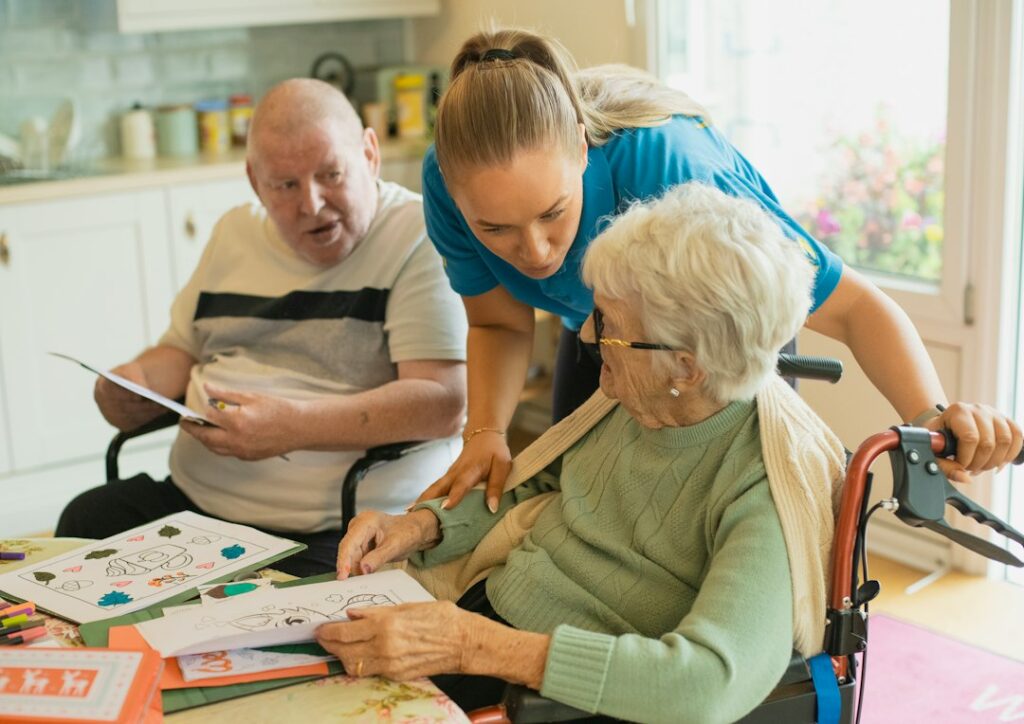
What is the main difference between assisted living and a nursing home?
Assisted living is generally designed for adults who need help with daily activities but do not require continuous skilled nursing care. A nursing home, also called a skilled nursing facility, is intended for people with more complex medical needs, rehabilitation needs, or a need for around-the-clock nursing supervision.
The difference is not simply the building or monthly price. It is primarily the level and type of care a resident requires.
In Pennsylvania, assisted living residences and personal care homes are residential settings. Nursing homes are licensed medical facilities. Some communities offer multiple levels of care, but each part of the operation must meet the licensing requirements that apply to its category.
What services are usually provided in assisted living?
Assisted living commonly helps residents remain as independent as possible while receiving support with routine tasks. Services may include:
- Bathing, dressing, grooming, and toileting
- Getting in and out of bed or a chair
- Medication reminders or medication assistance
- Meals and special diet support
- Housekeeping and laundry
- Transportation arrangements
- Wellness checks and safety supervision
- Social, recreational, and educational activities
- Assistance arranging medical appointments
The exact services vary by residence and by the resident’s assessment. Some Pennsylvania assisted living residences may provide supplemental health care services or offer different service packages as needs change.
Assisted living is often a reasonable fit for someone who can no longer manage safely at home but does not need a nurse involved in complex care throughout the day and night.
When is a nursing home more appropriate?
A nursing home may be more suitable when a person needs medical monitoring, skilled treatment, or extensive hands-on care that assisted living cannot safely provide.
Examples may include:
- Recovery after a serious illness, surgery, or hospital stay
- Ongoing wound care or intravenous treatment
- Significant mobility limitations requiring frequent transfers
- Complex medication or medical equipment needs
- Advanced chronic disease requiring regular nursing oversight
- Frequent changes in health status
- A need for 24-hour nursing supervision
- Rehabilitation provided by physical, occupational, or speech therapists
Nursing homes may provide both short-term rehabilitation and long-term care. A person recovering from a broken hip, for example, might enter for therapy and later return home. Another resident may need long-term nursing care because of advanced illness or severe physical limitations.
A physician’s recommendation, hospital discharge plan, or formal care assessment can help clarify whether skilled nursing is necessary.
How do daily routines differ?
Assisted living usually feels more residential. Residents may have private or semi-private living spaces, shared dining areas, scheduled activities, and more flexibility in their daily routines. Staff members provide assistance while encouraging residents to make choices about meals, clothing, activities, and schedules.
Nursing homes operate with a stronger medical-care structure. Residents may have regular nursing assessments, treatment schedules, therapy sessions, and closer monitoring of vital signs or symptoms. The daily routine may be more structured because care must be coordinated around clinical needs.
Neither setting is automatically better. The right environment depends on whether the person’s primary need is support with independence or ongoing medical supervision.
What is the difference between a personal care home and assisted living in Pennsylvania?
Pennsylvania uses both “personal care home” and “assisted living residence” as specific licensing categories. They are related but not identical.
Personal care homes provide housing, meals, supervision, and assistance with daily living for people who do not need nursing-facility-level care. Assisted living residences provide similar support but are designed to accommodate residents with somewhat higher care needs while supporting independence and aging in place.
Assisted living residences have additional requirements involving matters such as living-unit design, service planning, staffing, and access to supplemental health care. A facility’s advertising language does not always explain these distinctions clearly, so families should ask which license applies to the residence and what services that license permits.
Which option costs more?
Costs vary widely based on location, room type, care needs, staffing, and services included in the agreement. Assisted living is commonly paid through private funds, retirement income, savings, long-term care insurance, or other personal resources. Personal care homes and assisted living residences are generally not covered by Medicare for ordinary long-term residential care.
Nursing home payment is more complicated. Medicare may cover limited short-term skilled nursing or rehabilitation after a qualifying hospitalization when specific medical requirements are met. Medicare generally does not pay for an indefinite nursing home stay when the primary need is custodial assistance with bathing, dressing, eating, or similar activities.
Medicaid may help eligible residents pay for nursing facility care and may support certain home- and community-based services. Eligibility depends on income, assets, medical need, and program rules. Families should review the written agreement carefully to identify base charges, care-level fees, medication costs, transportation charges, and possible increases over time.
How should households in Shillington evaluate the choice?
A practical assessment should begin with the person’s current abilities and likely needs over the next year, not only with today’s situation.

Consider whether the person can:
- Transfer safely from a bed or chair
- Use the bathroom without immediate assistance
- Take medications correctly
- Recognize and respond to emergencies
- Eat and drink adequately
- Walk safely indoors
- Manage diabetes, wounds, oxygen, or other medical needs
- Remain safe during periods of illness or confusion
Seasonal conditions also deserve attention. Winter ice, snow, shorter daylight, and heating concerns can make transportation, walking, and home maintenance more difficult for older adults in the community. A setting that appears workable during mild weather may not remain practical during a storm or a prolonged power outage.
Family availability matters as well. A resident may need less formal care when relatives live nearby and can provide transportation or oversight, but that arrangement can become unreliable if caregivers work full-time, live far away, or have their own health limitations.
What should families ask before choosing?
A tour is useful, but direct questions are more valuable than general impressions. Ask:
- What level of care is provided by staff on every shift?
- Is a nurse available, and at what times?
- How are falls, medication errors, and changes in condition handled?
- What happens if the resident needs more care later?
- Are outside home health, hospice, or therapy services permitted?
- Which services are included in the monthly rate?
- What charges are added when care needs increase?
- How are emergencies handled during severe weather or power outages?
- What are the discharge or transfer rules?
- Is the residence currently licensed and regularly inspected?
The answers should be specific and provided in writing when possible. A facility that cannot safely meet a person’s needs may require a transfer, even if the resident and family prefer to remain there.
Can someone move from assisted living to a nursing home later?
Yes. Many people begin in assisted living and later move to a nursing home if their medical or functional needs become too extensive. Others move temporarily to a nursing facility for rehabilitation and then return to assisted living or home.
Planning early can reduce stress. Families should ask what signs would indicate that a higher level of care is needed, whether records can be transferred smoothly, and how personal belongings, medications, and decision-making authority would be handled.
The most reliable choice is the setting that matches the person’s actual care needs, protects safety, preserves as much independence as possible, and remains financially workable over time.
